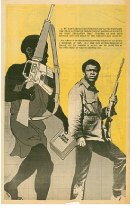
It is unusual to walk around a gallery that does so little to debate or impress upon you the aesthetic nature of the artist. Urbis’s brilliant Emory Douglas retrospective is, however, an incredible testimony to the power of his work, and the fact that they have understood that it can’t be understood outside of his passions makes the exhibition itself a stunning experience. Douglas was the visual representation of the Black Panther Party’s struggle. The party’s rise was born of the need to find a definitive solution to the abhorrent social situation that existed in USA in the sixties. All happening at a point when it was being written off as a thing of the past in many liberal quarters. There message had to be an inclusive one without watering down the anger that was there at its inception and was always going to leave them open to being represented though violence. They were an organisation who understood that violence was the work tool behind a more structural oppression that we all lived under. And Douglas clarified this message more clearly than any of the speeches that live on from the era.
[]